

Employee experience has a bit of a reputation problem. Most companies care about it. Many talk about it. Some even launch their own shiny initiatives. And then… six months later, everyone’s quietly wondering why engagement hasn’t improved and why Mondays still feel a bit, well, heavy.
That’s because employee experience is often treated like a one-off project. It might look like a wellness week here or there, a new benefit that doesn’t stand the test of time, or maybe a survey when things start feeling off (too little too late?) All good ideas but without a longer-term plan, they become disconnected moments rather than a meaningful experience. And this is something that employees notice.
This is exactly why a 12-month employee experience strategy works better because it focuses less on quick wins and more on continuity. It reflects how people actually experience work, over time, through busy periods, calm ones, wins, challenges, and everything in between.
So, instead of reacting when something breaks, you create a steady rhythm. This means that your support feels consistent, your communication feels intentional, and employees don’t feel like the company suddenly remembered them every quarter.
In short, a 12-month strategy moves you from reactive to reliable and reliability, it turns out, goes a long way.
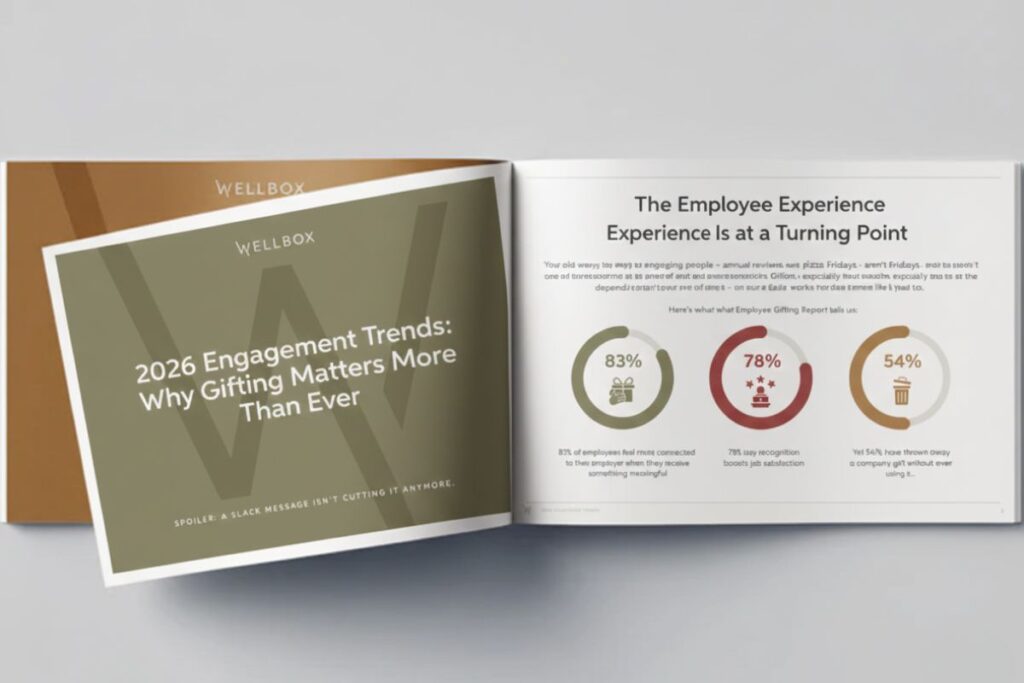
👇 Take a Closer Look at What’s Shaping Employee Experience in 2026 👇
This report will help you focus on what genuinely supports engagement — and what’s simply noise.
Download our 2026 Engagement Trends Report to explore:
- How employee expectations are changing- and why one-off engagement tactics are losing impact
- What our data from real-world engagement programmes reveals about what employees actually respond to over time
- The latest patterns shaping recognition, from wellbeing-led initiatives to choice-driven and values-aligned rewards
Focus on The Every Day Employee Experience
The vast majority of employee experience is shaped by how work actually unfolds over time. That means that most people form their view of an organisation through repeated, everyday interactions: how clearly expectations are set, how mistakes are handled, how pressure shows up during busy periods, and whether effort is recognised consistently.
Importantly, these experiences compound. They’re what employees remember long after a score or benchmark has been reviewed. This is where many employee experience strategies fall short. Data is collected, trends are analysed, and dashboards are updated – but the connection back to real working conditions is often weak. In short, metrics tell you that something is happening. They rarely explain why.
Taking a 12-month view of employee experience helps close that gap. Instead of reacting to isolated data points, you can look for recurring pressure points across the year: when people tend to feel stretched, when motivation dips, when uncertainty creeps in, and when support makes the biggest difference.
Designing for employee experience at this level means thinking less about performance indicators and more about cause and effect. If something consistently feels difficult, unclear, or unrewarding, it will eventually show up in the data – whether you catch it early or not. Focusing on lived experience allows you to give context. And that context is what allows improvement to be deliberate.

What a 12-Month Employee Experience Strategy Looks Like in Practice
A 12-month employee experience strategy isn’t about trying to design every interaction in advance. That level of control isn’t realistic, and it usually backfires. What it is about is recognising that employee needs change in fairly consistent ways over time – and planning accordingly for that change.
Across a year, most people move through similar phases at work. They spend time getting oriented and finding their footing. They build confidence and capability. They look for feedback, recognition, and signs they’re progressing. Eventually, they start assessing what the future holds and whether their role still supports it.
When employee experience is planned in short bursts, these shifts are easy to miss. Support arrives too late, development conversations happen reactively, and retention risks show up only once someone is already halfway out the door.
Taking a longer view allows organisations to be more deliberate. Clarity tends to matter most earlier on. As the year progresses, the emphasis often needs to move towards growth, recognition, and momentum. Later still, questions around progression and long-term fit become more prominent.
Planning employee experience across a full year doesn’t mean doing more. It means doing the right things at the right time – and doing them consistently enough that employees don’t experience support as sporadic or opportunistic. That’s when employee experience stops feeling like a collection of disconnected initiatives, and starts operating as part of how the organisation actually runs.

Who Owns the Employee Experience? (Hint: It’s Not Just HR)
Employee experience can’t sit neatly inside one team’s remit and it’s pretty unrealistic to expect it to.
HR is central to shaping the conditions for a good employee experience, but when responsibility stops there, a gap opens up between what’s designed and what’s actually experienced.
In practice, employee experience is shaped through routine interactions the whole way through your organisation. How managers handle pressure. How clearly leaders communicate during uncertainty. Whether people feel trusted to contribute, or quietly discouraged from doing so. These are the moments that accumulate into a broader perception of what it’s like to work somewhere.
This is why the strongest 12-month employee experience strategies distribute ownership. Leadership sets expectations and direction. Managers influence consistency and fairness. Teams reinforce norms through everyday behaviour. Each layer plays a different role, but the impact only works when they’re aligned.
Shared ownership doesn’t mean everyone doing the same thing. It means everyone understanding how their actions contribute to the experience employees have over time.
When that happens, employee experience stops being treated as a standalone initiative and starts functioning as part of the organisation’s operating model.
Using Technology to Support Employee Experience (Without Overdoing It)
Technology has a real influence on employee experience, but it’s rarely the deciding factor on its own.
Most workplace tools fail to improve experience not because they’re inherently bad, but because they’re introduced without a clear role. New platforms are layered on top of existing ones, expectations are vague, and employees are left to work out how – or whether – they’re supposed to use them.
In a well-designed employee experience strategy, technology plays a supporting role. It should reduce effort, create clarity, and make routine tasks easier to manage. When tools add friction, duplicate work, or demand constant attention, they quickly undermine the experience they’re meant to improve.
More technology doesn’t equate to better experience. And in many cases, it has the opposite effect. Poorly timed rollouts and overlapping platforms increase cognitive load and make everyday work feel unnecessarily complicated.
The more effective approach is to choose technology based on current working realities, not future aspirations or promises. Introduce it with a specific purpose, set clear expectations for how it should be used, and allow time for it to become part of normal workflow. When technology is integrated thoughtfully, employees don’t have to think about it at all – and that’s usually when it’s doing its job properly.

How to Measure Employee Experience Without Survey Fatigue
If the phrase “quick pulse survey” makes your team sigh audibly, you’re not alone. Measuring employee experience matters – but measuring it constantly doesn’t automatically make it better. In fact, too much asking and not enough acting is a fast track to disengagement. A smarter approach is to look for signals.
Yes, surveys have their place. They help you spot trends and check assumptions. But some of the most useful indicators of employee experience are already happening around you. How often people move roles internally. Who speaks up in meetings. Where turnover quietly starts to creep. Whether recognition feels natural or forced.
In a 12-month employee experience strategy, measurement works best when it’s spaced out and purposeful. Fewer surveys, better questions, and clear follow-through. When people see action, they’re far more willing to share feedback next time.
The goal isn’t to track everything. It’s to understand enough to know what’s working and what needs attention before it becomes a bigger problem.

How to Keep Your Employee Experience Strategy on Track When Priorities Shift
Because let’s be realistic, priorities will shift. Budgets change. Leadership teams reshuffle. A “quiet quarter” suddenly isn’t quiet at all. And that’s usually when employee experience initiatives start slipping down the to-do list.
The problem is that employee experience simply isn’t built to survive change.
A resilient 12-month employee experience strategy doesn’t rely on big launches or perfect conditions. It’s woven into everyday rhythms – how goals are set, how feedback is given, how people are recognised, how decisions are communicated.
When employee experience lives inside existing processes, it’s much harder to drop. It continues quietly doing its job, even when attention is elsewhere.
The aim isn’t to protect every initiative. It’s to protect the intent behind them. If your strategy is flexible enough to adapt – rather than pause – it’s far more likely to make it to month twelve in one piece.
Gifting as an Employee Experience Strategy
Gifting can be a surprisingly effective employee experience strategy when it’s done with intention, not impulse. It’s less about the item itself and more about the moment it arrives.
Gifting can be used to reflect how people are likely feeling at different points in the year. Seasonal moments like Blue Monday, for example, are acknowledged with thoughtful gifts that recognise a shared dip in energy or motivation – not as a gimmick, but as a simple way of saying we see you.
Moments like maternity leave can be marked with gifts that acknowledge a significant life change, not just a change in employment status. It’s a small gesture, but one that often lands when people need reassurance and connection the most.
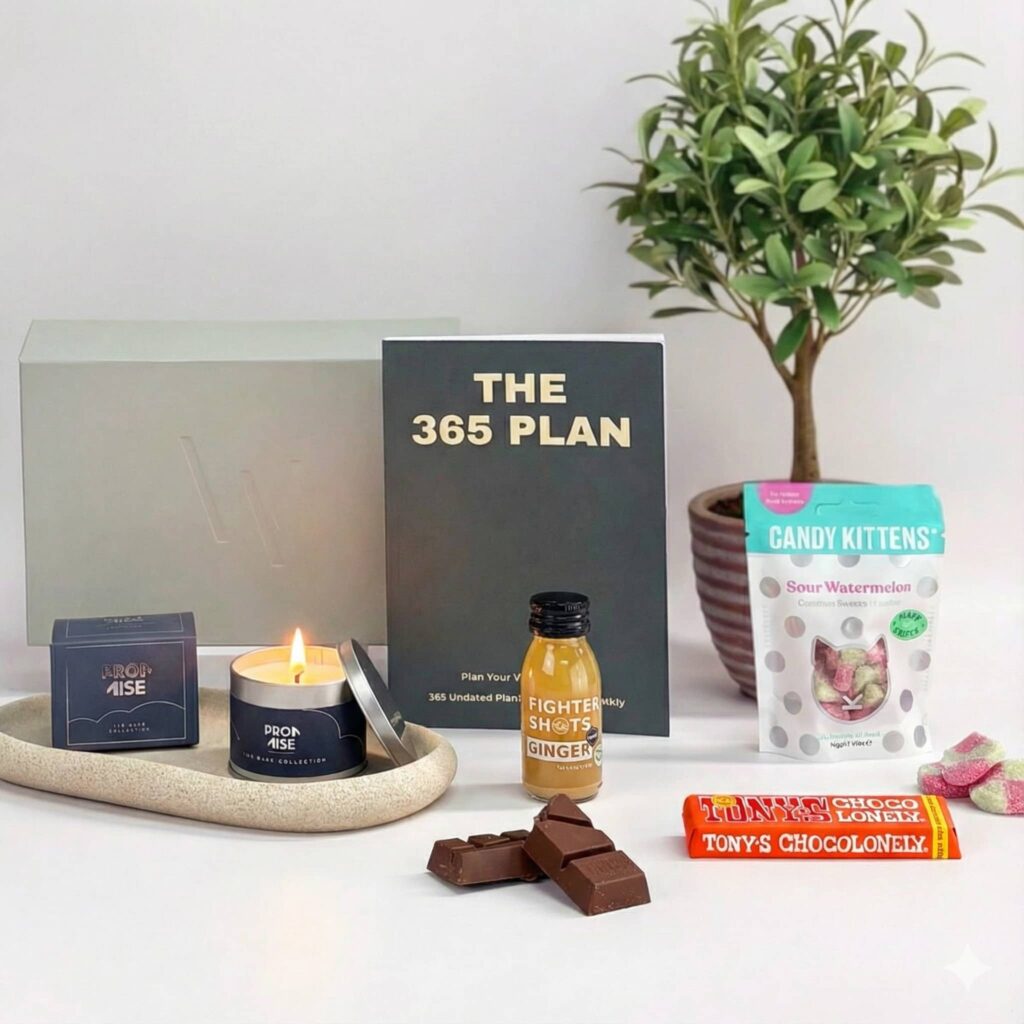
Wellbeing and mental health gifts are also woven in throughout the year, offering consistent support rather than reactive fixes. And for more everyday moments, shared gifts like office snack boxes create low-pressure opportunities for connection – no speeches, no spotlight, just something everyone can enjoy together.
Every gift sent through us also includes a charitable donation, extending the impact beyond the workplace itself. When gifting is handled this way, it stops feeling like a tick-box exercise and starts reinforcing care, values, and continuity across the employee experience.

What Employee Experience Strategies Look Like in Practice
Effective employee experience strategies are usually practical by design. They focus less on headline initiatives and more on removing everyday friction, supporting energy, and creating consistency across the year.
As employee engagement experts, this shows up in how physical wellbeing is integrated into the working week here at WellBox. An on-site gym and bi-weekly yoga sessions aren’t positioned as wellness add-ons, but as accessibility choices. By removing the time, cost, and planning barriers that often sit between people and movement, these initiatives help our team feel their best.
The same thinking applies to food. Our free staff lunches help to reduce cognitive load, remove the need for daily meal prep or last-minute decisions, save time, and encourage employees to take a proper break away from their desks. Over time, those small efficiencies contribute to better focus and more sustainable working patterns.
Connection and belonging are approached with the same intent. Our annual sports days and team activities are great fun, and all sit as part of a broader rhythm that creates shared experiences across the year. Moments like World Mental Health Day are marked with practical, thoughtful activities, reinforcing the idea that wellbeing is something to be supported consistently – not only when it’s trending.
Individually, none of these strategies are revolutionary. Their impact comes from how they’re delivered: deliberately, consistently, and as part of a wider 12-month approach. That’s what allows employee experience to feel embedded in everyday working life, rather than bolted on as a series of initiatives.
Building a Sustainable 12-Month Employee Experience Strategy
Building a 12-month employee experience strategy is about planning with intention. When you zoom out and look at the year as a whole, employee experience stops feeling reactive. You’re no longer scrambling to fix problems as they appear – you’re creating consistency, trust, and momentum over time.
The best strategies don’t rely on grand gestures or constant reinvention. They’re built into everyday moments. They’re owned by more than one team. They evolve as priorities shift. And most importantly, they feel real to the people experiencing them. If your employees can sense a steady rhythm – one that supports them through change, growth, and the odd chaotic week – you’re already on the right track.
Because when employee experience is planned thoughtfully across the year, it doesn’t just improve how work feels. It strengthens how your business performs.
And that’s a win worth planning for.
